

Why Verified Views Get Challenged or Rejected
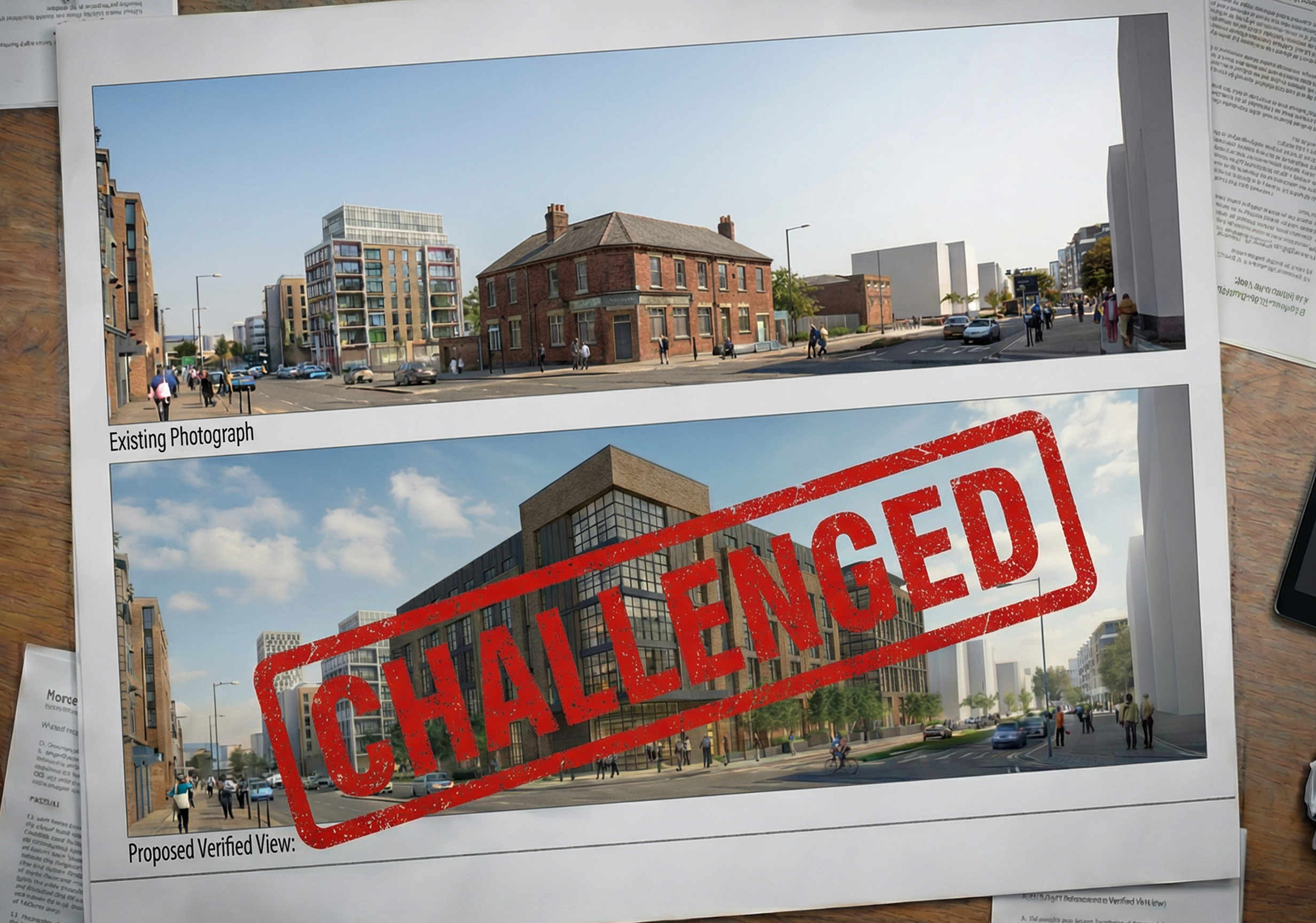
Most Verified Views that fail do not do so because the design is unacceptable. They fail because the methodology cannot be trusted.
Challenges typically focus on one of three areas: camera accuracy, projection logic, or survey control. If any of these are unclear, inconsistent, or undocumented, confidence in the image collapses.
Common reasons for challenge include:
Camera positions that cannot be tied back to a surveyed point
Lens information that is missing, inconsistent, or implausible
Use of perspective projections that do not match the real photograph
Mismatch between photographed and modelled horizon lines
Inadequate documentation of how the image was constructed
A frequent issue is over-reliance on software defaults. Many visualisation tools are designed for aesthetic output, not evidential accuracy. They may approximate lens behaviour or adjust perspective automatically in ways that are helpful for marketing, but unacceptable for verification.
Once a single Verified View is called into question, the credibility of the entire visual submission is undermined. At that point, the discussion shifts away from design and onto process.
In practice, Verified Views are most often challenged not because of the design shown, but because the methodology underpinning the image cannot be relied upon.
For more information on AVRs, check out our other journals below:
